Nintendo Switch Firmware Versus the Version a Dump Was Built Against
One number moves forward with your console. The other was frozen the day the content was built. Confusing them explains most firmware questions we get.
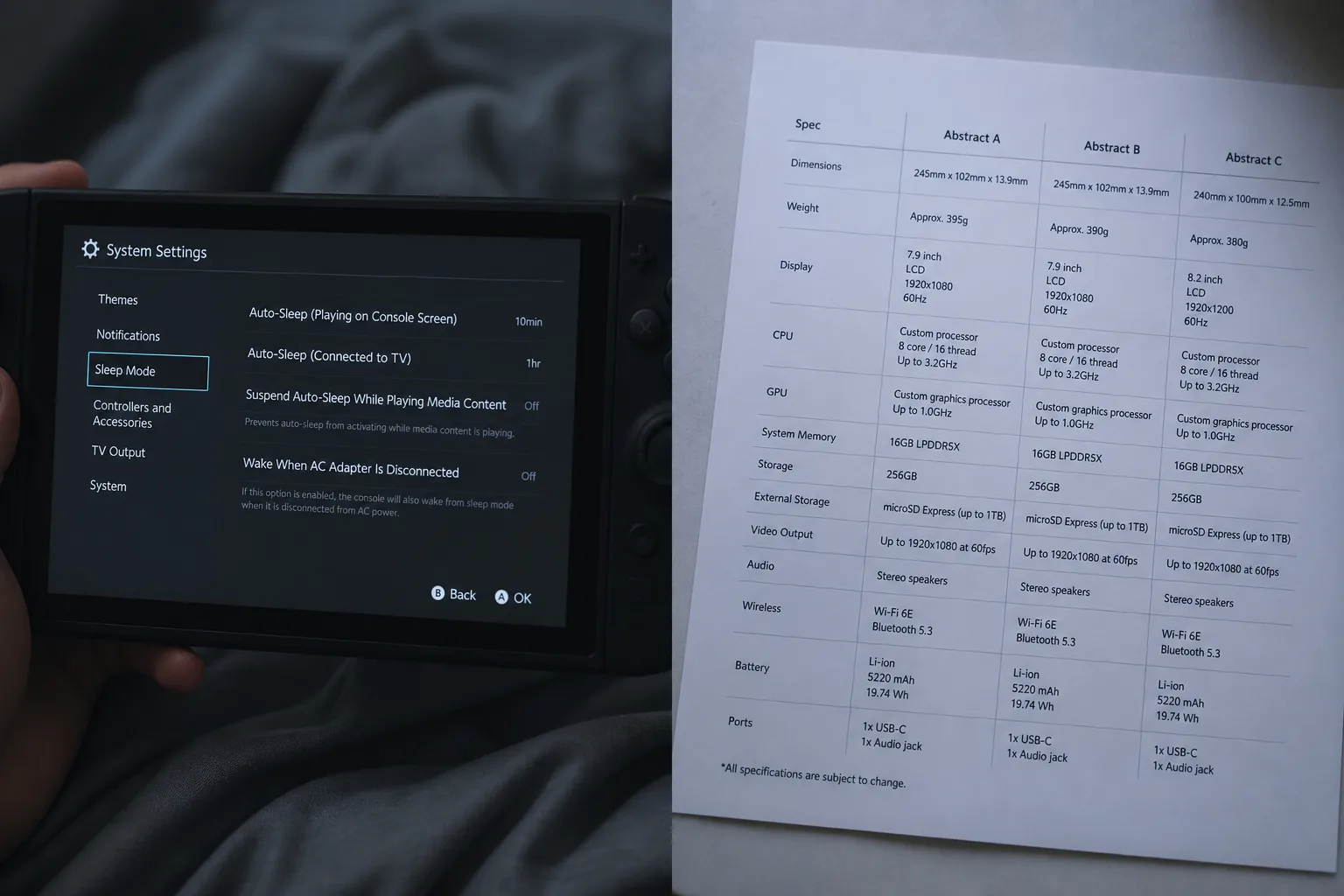
Two numbers wearing the same name
Nearly every question we get about nintendo switch firmware turns out to be one question in disguise: two entirely different values share a name, a format, and a habit of appearing in the same sentence. One belongs to a console and changes over its life. The other belongs to a file and never changes at all, because it was written down once when the content was built and then sealed inside it.
Separate them and the confusion evaporates. The console number describes present state. The build target describes a historical requirement. Comparing them is legitimate; treating them as the same reading is not.
The number the console keeps for itself
A console tracks its own system version and reports it under System settings, on the system information screen. That value moves forward as updates are applied, and only forward under normal use. It is a live property of one specific machine, which means no catalog, article, or forum post can tell you what it is; only the machine can.
It is also the only number that answers the question people usually mean when they ask about compatibility, because it describes what is actually available to run content. Anything printed on a web page about a current version is a snapshot of when that page was written, which is exactly why we decline to print one.
The number sealed into the content
When a title, a patch, or a block of add-on content is built, the toolchain records the system version it was made against. That value goes into the package and stays there permanently. Copying the content, moving it between storage media, or renaming the file changes nothing about it, and no amount of updating a console reaches back and alters it.
Because each piece is built separately, one game can carry several of these values. The base title declares one, a patch built two years later declares another, and add-on content declares its own. The set is not required to agree, and when it disagrees the highest declaration is the effective requirement for the assembled thing. How that value is surfaced in the catalog interface is covered separately in our notes on firmware fields on a listing.
Why the gap between them widens
The two numbers drift apart by design. A console that gets updated climbs steadily. Content sits still at whatever it was built against. So the ordinary situation, years into a platform, is a console reporting a value well above what an older dump declares, and that is not a problem: content asking for less than what exists is content whose requirement is already satisfied.
The interesting case is the reverse. If content declares a higher target than the console reports, it is asking for behavior the console does not claim to provide yet. That is a mismatch to reason about, not a corrupt file and not a bad dump. Verify the checksum on the listing to rule out transfer damage, then treat the difference as what it is: two timelines that have not met.
Trimmed images, split archives, and storage layout have no bearing on any of this, though they get blamed for it; the storage side is written up in card capacity and dump sizes.
System update content is a separate category
One last conflation is worth naming. System update content is its own class of data with its own identifiers, unrelated to any game title. A catalog entry for a title does not contain it, and a title version field is not describing it. If someone hands you a file and calls it both, one of those labels is wrong.
Keeping the categories apart is what makes the rest legible: a title has a build target, a console has a system version, and update content is a third thing entirely. What the title files themselves consist of is covered in dumps versus cartridges. If a catalog entry states a value that contradicts the file you downloaded, Report an issue with the slug and both readings.